Best Anti Slip Paint for Wood: What to Use on Decks, Stairs, Porches, Ramps, and Outdoor Wood?
The best anti slip paint for wood is not one magic product. It is the right coating system for the surface, the weather exposure, the foot traffic, and the texture level people can actually live with.
For most homes and properties, the best choice is a quality exterior porch, floor, or deck coating with either built in texture or a compatible anti slip additive. For stairs, ramps, docks, and wet areas, the coating needs more grip, better prep, and closer attention to the product label.
This matters because slips and falls are not small problems. The CDC reports that more than one out of four older adults falls each year, and falling once doubles the chance of falling again. Accessible walking surfaces also need to be stable, firm, and slip resistant under ADA guidance. Translation: if a wood deck turns into a skating rink every time it rains, that is not a “quirky old house feature.” That is a fix it before someone learns gravity the hard way situation.
Stephen Radl Painting has served homeowners and businesses since 1979, with services that include interior painting, exterior painting, wood staining, stucco repair, and vinyl and aluminum painting. The right anti slip finish starts with that same basic idea: careful prep, quality materials, and a surface that fits how the space is used.
Quick Answer: What Is the Best Anti Slip Paint for Wood?
For most outdoor wood surfaces, the best anti slip paint is an exterior rated porch, floor, deck, or patio coating that is made for foot traffic and either includes texture or accepts an anti slip additive.
Products like Benjamin Moore Insl X Sure Step are designed as skid resistant coatings for interior and exterior high traffic surfaces such as patios, walkways, steps, and pool decks. BEHR Premium Porch and Patio Anti Slip Floor Paint is listed for properly prepared interior and exterior wood and concrete surfaces, including porches, floors, decks, pool decks, patios, siding, trim, furniture, and trellises.
Here is the simple breakdown:
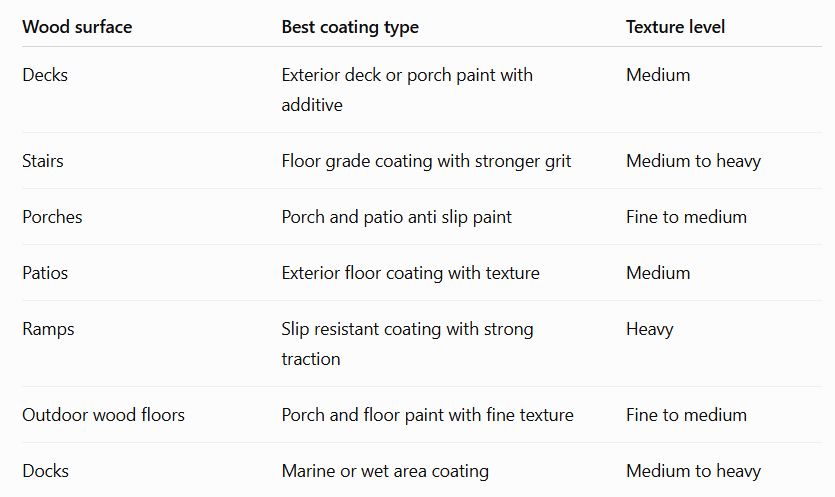
The wrong move is using regular exterior wall paint. Exterior wall paint may handle weather on siding, but walking surfaces need floor rated products because they deal with shoes, pets, furniture, rain, dirt, and regular abrasion. Product data sheets for floor coatings often call for clean, dry, sound surfaces and list specific dry times before normal use.
Why Wood Gets Slippery?
Wood gets slippery when moisture, algae, mildew, dirt, worn paint, or a too smooth finish sits on the walking surface. Outdoor wood also moves with weather, sun, humidity, and age, so a coating that worked years ago may no longer give enough grip.
Painted surfaces can become slick when wet, which is why some product data sheets warn users even when the product is made for porches and patios. Outdoor walking surface guidance also points out that painted areas can become slippery when wet or frosty, and grit can be added to paint to increase slip resistance.
Common slippery wood problems include:
Rain sitting on flat deck boards
Mildew or algae in shaded areas
Old paint that has worn smooth
Glossy coatings with poor grip
Loose boards or uneven stair treads
Dirt buildup near doors, planters, and railings
A coating can improve grip, but it cannot fix rotten wood, loose steps, bad drainage, or unsafe construction. The CDC home fall checklist tells homeowners to fix loose or uneven steps and keep stairs clear of objects. Anti slip paint helps most when the wood beneath it is sound.
Main Types of Anti Slip Paint and Coatings for Wood
1. Paint With Built In Aggregate
Built in aggregate paint already contains texture in the formula. This is often the easiest option for homeowners who want a cleaner buying process.
Benjamin Moore describes Insl X Sure Step as a water reduced anti slip coating that uses aggregate in the paint formula to create a durable skid resistant finish on interior and exterior surfaces. Its product data sheet lists features such as skid resistance, abrasion resistance, color retention, fast drying, and resistance to ponding water.
Best for:
Decks
Steps
Walkways
Patios
Pool deck areas
Outdoor wood floors
This type works well when the surface needs a finished painted look with added grip. It is not the answer for damaged boards or a surface that needs major repair first.
2. Paint Plus Anti Slip Additive
An anti slip additive gives more control over texture. You mix the additive into a compatible coating, or in some cases broadcast it into the wet coating.
Sherwin Williams H&C SharkGrip is a micronized polymer additive made to add slip resistance, fine texture, and gloss reduction to compatible coatings. Rust Oleum Anti Skid Additive uses aluminum oxide grit and is designed to be mixed into compatible coatings, with the technical data sheet noting that it should be mixed into the final coat when more than one coat is applied.
Best for:
Stairs that need more grip
Ramps
Decks with heavy foot traffic
Rental properties
Commercial walkways
Outdoor steps near water
This option is strong because you can adjust the texture. The trap is adding too much grit. More grit can mean more grip, but it can also mean rough bare feet, harder cleaning, and a surface that looks gritty instead of finished.
3. Porch and Floor Paint With Texture Added
Porch and floor paint is made for horizontal surfaces that get walked on. That already makes it a better choice than standard wall paint.
BEHR’s anti slip porch and patio coating is a textured low lustre enamel made for properly prepared interior and exterior wood and concrete surfaces, including porches, floors, decks, pool decks, and patios. Manufacturer directions for porch and patio floor paint also stress that surfaces must be clean and free from dust, oil, grease, wax, mold stains, loose paint, peeling paint, and other foreign material.
Best for:
Covered porches
Wood patios
Outdoor wood floors
Light to medium traffic decks
Entry steps
If the wood is in good condition, this can give a nice balance between appearance and safety.
4. Textured Deck Coating or Resurfacer
Textured deck coatings can help older wood look better and feel safer underfoot, especially when the boards have small surface cracks. Benjamin Moore Sure Step, for example, is described as filling and sealing minor surface cracks.
Best for:
Weathered decks
Minor surface checking
Worn walking paths
Outdoor stairs with visible coating wear
The key word is “minor.” A heavy coating is not a magic blanket for rotten wood. If boards flex, crumble, or hold moisture, the repair comes before paint. Nobody wins when fresh paint is asked to cosplay as carpentry.
5. Stain Plus Grit
Some owners do not want to cover wood grain with paint. In that case, a compatible stain or sealer with an anti slip additive may be a better path.
Sherwin Williams says SharkGrip has low density, which helps it stay suspended in thin materials such as stains. Rust Oleum states that its anti skid additive can create a slip resistant coating when mixed with epoxy, latex or oil based paints, stains, or sealers.
Best for:
Wood decks where grain matters
Natural looking porches
Stained stairs
Outdoor wood walkways
This is a good fit when you want grip without fully hiding the character of the wood.
6. Marine Grade Non Slip Coating
Docks and splash zones need tougher thinking. The surface sees wet feet, algae, sun, water, and more cleaning.
Marine or wet area coatings can work well, but the label matters. Some coatings resist rain and ponding water, but are not made for immersion or constant water exposure. Benjamin Moore’s Sure Step technical data sheet states that the product is not for immersion service.
Best for:
Docks
Boat house walkways
Wet steps
Wood areas near pools
Splash zones
For docks, the safest answer is product specific. Read the data sheet, check water exposure limits, and do not assume “outdoor” means “made for dock life.”
Best Anti Slip Paint by Wood Surface
Best Anti Slip Paint for Wood Decks
For wood decks, use an exterior deck, porch, or floor coating with fine to medium texture. Decks see weather, foot traffic, patio furniture, grill zones, pet traffic, and standing moisture near planters.
Acrylic coatings are common for outdoor floor paint because many are easier to clean up and can dry faster than heavier coating systems, while specific products still require proper prep and waiting times before full use. BEHR lists a two hour dry to touch time for its anti slip porch and patio floor paint, while also noting longer dry time in cooler temperatures and higher humidity.
Best choice: exterior deck or porch paint with built in texture, or porch and floor paint with a compatible anti slip additive.
Best Anti Slip Paint for Wood Stairs
For wood stairs, use a floor grade exterior coating with medium to heavy texture. Stairs need more traction because people land on a smaller surface with more body weight and less balance.
The CDC fall checklist points to broken or uneven steps as a home safety issue and tells homeowners to fix loose or uneven steps. Good coating is not enough if the stair tread is unstable.
Best choice: textured porch and floor paint or anti slip coating with extra grit on the tread area.
Best Anti Slip Paint for Wood Porches
For porches, use a porch and patio anti slip floor paint with fine to medium texture. Covered porches may not get direct rain, but they still collect dirt, moisture from shoes, and wear near the front door.
BEHR lists its anti slip porch and patio floor paint for porches, floors, decks, pool decks, basement floors, patios, siding, trim, furniture, and trellises when surfaces are properly prepared.
Best choice: porch and patio anti slip paint if you want a clean finished look without heavy grit.
Best Anti Slip Paint for Wood Ramps
For ramps, choose stronger texture and better drainage planning. ADA guidance says accessible floor and ground surfaces must be stable, firm, and slip resistant.
A ramp has one job: help people move safely from one level to another. If it gets slick, that job fails fast.
Best choice: exterior floor coating with a heavier anti slip additive, plus careful attention to slope, drainage, lighting, and handrails where needed.
Best Anti Slip Paint for Outdoor Wood Floors
For outdoor wood floors, choose a coating that can handle foot traffic without feeling too rough. A fine or medium additive usually works better than heavy grit in areas where people may walk barefoot.
Manufacturer guidance for porch and floor coatings commonly calls for surfaces to be clean, dry, and sound before coating. That matters even more on wood floors because high spots and worn paths show quickly.
Best choice: porch and floor enamel with fine texture or a built in aggregate coating.
Best Anti Slip Paint for Docks
For docks, use a coating designed for wet outdoor conditions, and read the water exposure limits before buying. Products can differ widely in how they handle splash, rain, ponding water, and immersion.
Benjamin Moore Sure Step lists resistance to ponding water, but the product data also says it is not for immersion service. That is the kind of detail that keeps a dock project from becoming a peeling mess with a view.
Best choice: marine or wet area rated coating with medium to heavy texture, selected from the manufacturer data sheet.
How to Choose the Right Texture Level?
Texture is not a contest. The roughest surface is not always the smartest surface.
Fine texture works for porches, outdoor wood floors, and barefoot areas. It adds grip while keeping the finish easier to clean.
Medium texture works for most decks, patios, and stairs. It gives better traction without making the surface feel like a cheese grater for feet.
Heavy texture works for ramps, wet areas, commercial walkways, and stairs with higher risk. It gives stronger grip, but it can trap dirt and feel rough.
A good rule: match the texture to the risk. A sunny covered porch does not need the same grit as a shaded ramp that gets wet every morning.
What to Look for on the Product Label?
Before you buy anti slip paint for wood, check the label and data sheet. Marketing words are nice. Product limits are where the truth lives.
Look for these details:
Wood compatibility: The product should say it works on wood or properly prepared wood.
Walking surface rating: Choose porch, floor, deck, patio, or walkway coatings.
Slip resistant language: Look for aggregate, anti slip, skid resistant, or traction wording.
Water exposure limits: Some coatings handle rain but not immersion.
Dry time and return to service: Dry to touch is not the same as ready for normal use.
Prep requirements: The label should explain cleaning, sanding, priming, and recoating.
BEHR’s product data says surfaces must be clean, sound, dry, and free of dirt, oil, and grease. Benjamin Moore’s Sure Step data sheet says the coating can be exposed to light foot traffic 24hours after the final coat, with four to five days needed before heavier or continuous foot traffic.
That waiting period is where many DIY projects go sideways. People paint Saturday morning, drag furniture back Saturday night, then blame the coating on Sunday. The paint did not fail. The schedule did.
Surface Prep Matters More Than the Paint Name
The best anti slip paint for wood still needs the right surface. If the wood is dirty, glossy, damp, peeling, or damaged, even a good coating can fail.
The USDA Forest Products Laboratory notes that paint can help protect wood from weathering and reduce moisture related problems, but finish performance depends on the wood, coating, application, and exposure. Sherwin Williams porch and floor enamel guidance says peeled or checked paint should be scraped and sanded to a sound surface, and glossy surfaces should be sanded dull before coating.
A strong prep process usually includes:
Washing away dirt, mildew, pollen, and loose debris
Scraping peeling paint
Sanding glossy or uneven spots
Repairing loose boards, popped nails, or damaged treads
Letting the wood dry fully
Priming bare wood when the product calls for it
Applying the right number of coats
Allowing proper dry time before use
Stephen Radl Painting’s service process is built around preparation, detailed craftsmanship, and completion with care. That is exactly the mindset an anti slip wood project needs. The coating is only the last visible step. The hidden work underneath is what keeps the finish from failing early.
Lead Paint Warning for Older Wood Surfaces
If the home was built before 1978, be careful before sanding or scraping old paint. The EPA says contractors paid to disturb paint in housing and child occupied facilities built before 1978 generally must be certified in lead safe work practices.
This matters for old porches, exterior steps, painted railings, and wood floors. Sanding old paint without checking can create unsafe dust. If the coating history is unknown, test first or call a qualified professional.
Professional Application vs DIY
DIY can work for a small, newer wood surface with sound boards and a simple coating. A small porch landing or a few steps may be manageable if the owner follows the product directions closely.
Call a professional painter when:
The deck is large
The surface is peeling badly
Stairs or ramps are involved
The wood has rot or loose boards
The old coating may contain lead
Drainage problems are present
You need a clean finish on a high visibility area
The property is a rental, business, or shared space
Stephen Radl Painting can help homeowners and property owners choose the right finish for wood surfaces through itspainting services, review finished work in the gallery, and request help through thecontact page. The company’s website also notes its focus on interior and exterior painting, wood staining, stucco repair, and vinyl and aluminum painting.
Common Mistakes That Make Anti Slip Paint Fail
Painting Over Dirty Wood
Paint does not bond well to dirt, mildew, oil, or loose paint. Product data for porch and patio floor paint says surfaces must be clean and free of dust, chalk, oil, grease, wax, mold and mildew stains, loose paint, and peeling paint before coating.
Using Regular Exterior Wall Paint
Wall paint is not made for constant foot traffic. Use floor, porch, deck, patio, or walkway coatings that match the surface.
Skipping Dry Time
BEHR states that cooler temperatures and higher humidity require longer dry time, and its guidance says to allow 72 hours before normal use for its porch and patio anti slip floor paint. Benjamin Moore Sure Step calls for four to five days before heavier or continuous foot traffic.
Adding Too Much Grit
Anti slip additives improve traction, but too much texture can make the surface uncomfortable and harder to clean. Sherwin Williams describes SharkGrip as a fine texturing additive, which is useful when a smoother finish is still desired.
Ignoring Drainage
If water sits on the surface after every rain, the coating is being asked to do too much. Outdoor walking surface guidance lists water from downspouts as a slip concern when it reaches walking areas.
Coating Damaged Wood
Paint does not repair structural problems. The CDC checklist tells homeowners to fix broken or uneven steps as part of fall prevention.
Maintenance: How to Keep Anti Slip Wood Surfaces Working?
Anti slip paint is not a one and done miracle. It needs cleaning and inspection.
Keep the surface working by:
Sweeping dirt and leaves often
Washing mildew prone areas
Checking stair treads and ramp paths
Touching up worn spots before bare wood shows
Keeping planters from trapping moisture
Fixing drainage problems
Recoating before the surface fails fully
The National Institute on Aging recommends keeping walking areas tidy and using good lighting around stairs and hallways to reduce fall risk at home. For outdoor wood, that same idea applies. A grippy coating helps, but clutter, poor lighting, wet leaves, and loose boards can still create hazards.
Stephen Radl Painting’s FAQ notes that long lasting paint work depends on surface preparation, quality paints and primers, and the right number of coats. That is the boring answer. It is also the correct one. Boring wins a lot in home maintenance.
Final Recommendation: What Should You Use?
For most decks, porches, and outdoor wood floors, choose an exterior porch, floor, deck, or patio coating with fine to medium anti slip texture.
For stairs and ramps, use a stronger slip resistant coating or add a compatible grit to the final coat.
For docks and wet zones, choose a marine or wet-area-rated product and read the water exposure limits carefully.
For older wood, repair and prep first. A premium coating over bad wood is still bad wood with a nicer outfit.
If you want help choosing the right finish for a wood deck, porch, stairway, ramp, patio, or outdoor wood surface, visit the Stephen Radl Painting homepage or request a free estimate. The best anti slip paint for wood is not just about the label on the can. It is about matching the coating to the surface, preparing the wood the right way, and applying it with care.
FAQ
1. What is the best anti slip paint for wood decks?
The best anti slip paint for wood decks is usually an exterior deck, porch, or floor coating with built in texture or a compatible anti slip additive. Products such as Benjamin Moore Insl X Sure Step are made for interior and exterior high traffic surfaces, including patios, walkways, steps, and pool decks.
2. Can I add grit to regular paint to make it non slip?
You can add a compatible anti slip additive to some coatings, but the paint still needs to be right for the walking surface. Sherwin Williams says H&C SharkGrip can be added to many oil based and latex paints and coatings, while Rust Oleum notes its anti skid additive should be mixed into the final coat when more than one coat is used.
3. Is anti slip paint safe for bare feet?
Anti slip paint can be comfortable for bare feet when the texture is fine or medium. A heavy grit coating may add more traction, but it can feel rough and trap dirt, so pool decks, porches, and barefoot areas usually need a smoother texture level. BEHR’s textured porch and patio anti slip paint is listed for pool decks and patios, which are common barefoot spaces.
4. How long does anti slip paint take to dry on wood?
Dry time depends on the product, temperature, humidity, and number of coats. Benjamin Moore Sure Step allows light foot traffic 24 hours after the final coat and heavier or continuous traffic after four to five days, while BEHR notes longer dry times in cooler or humid conditions and says to allow 72 hours before normal use for its anti slip porch and patio coating.
5. Can anti slip paint be used on wood stairs, ramps, and docks?
Yes, anti slip paint can be used on properly prepared wood stairs, ramps, and some dock surfaces when the coating is rated for that use. Ramps should have stable, firm, and slip resistant surfaces under ADA guidance, and dock areas need product specific water exposure checks because some coatings resist ponding water but are not made for immersion.