What Is Limewash Paint and How Do You Limewash Walls Properly?
As a professional painter, I’ve had more and more homeowners ask me about limewash paint over the past few years. Usually, it starts with a photo. Someone shows me a wall with soft movement, subtle texture, and a finish that feels warm and natural. Then they ask, “Can we do this in my house? ”
The short answer is yes. But limewash is very different from standard paint, and it’s important to understand what it is before deciding if it’s right for your home. Let me explain it the way I would if we were standing in your living room, talking about your next project.
What Is Limewash?
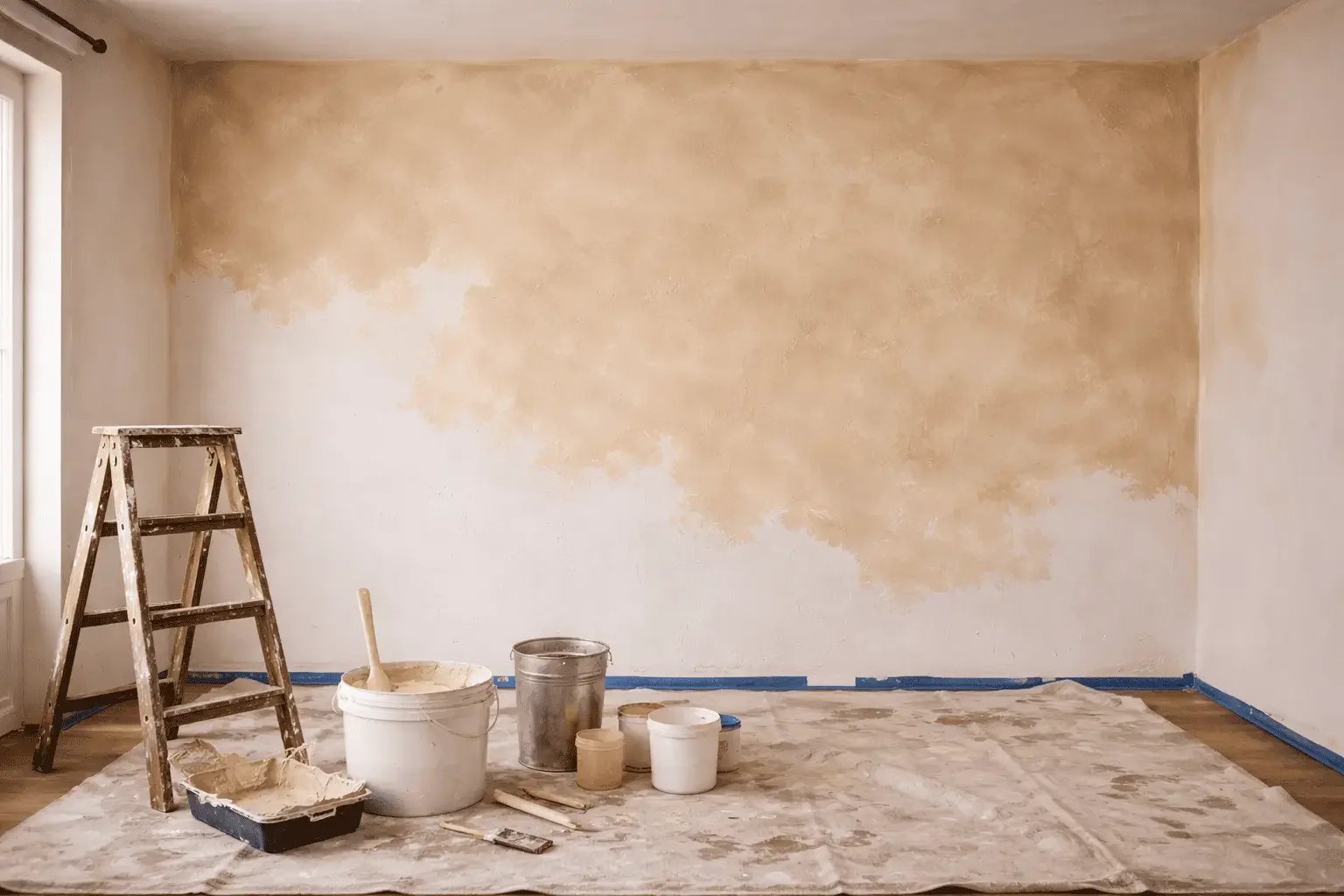
If you’re wondering what limewash is, here’s the simple version.
Limewash is a mineral-based coating made from crushed limestone that has been processed and mixed with water. Once applied, it absorbs into porous surfaces like plaster, brick, or stone. Instead of forming a thick layer on top, it becomes part of the surface.
This material has been used for centuries. Long before modern latex paint existed, limewash was protecting and coloring buildings.
In fact, the Keim Mineral Coatings blog article “What is Limewash? Why has this historic paint become such a design trend? ” explains that limewash dates back to ancient civilizations like Egypt and Greece, where it was valued for both its protective and decorative qualities. The article describes limewash as a traditional coating made from slaked lime, water, and natural pigments that creates a soft, matte, chalky finish while remaining highly breathable. That breathability is one of the reasons it has endured for centuries; it allows walls to regulate moisture instead of trapping it beneath a sealed surface.
That history is one of the reasons many homeowners are drawn to it. It feels authentic and natural.
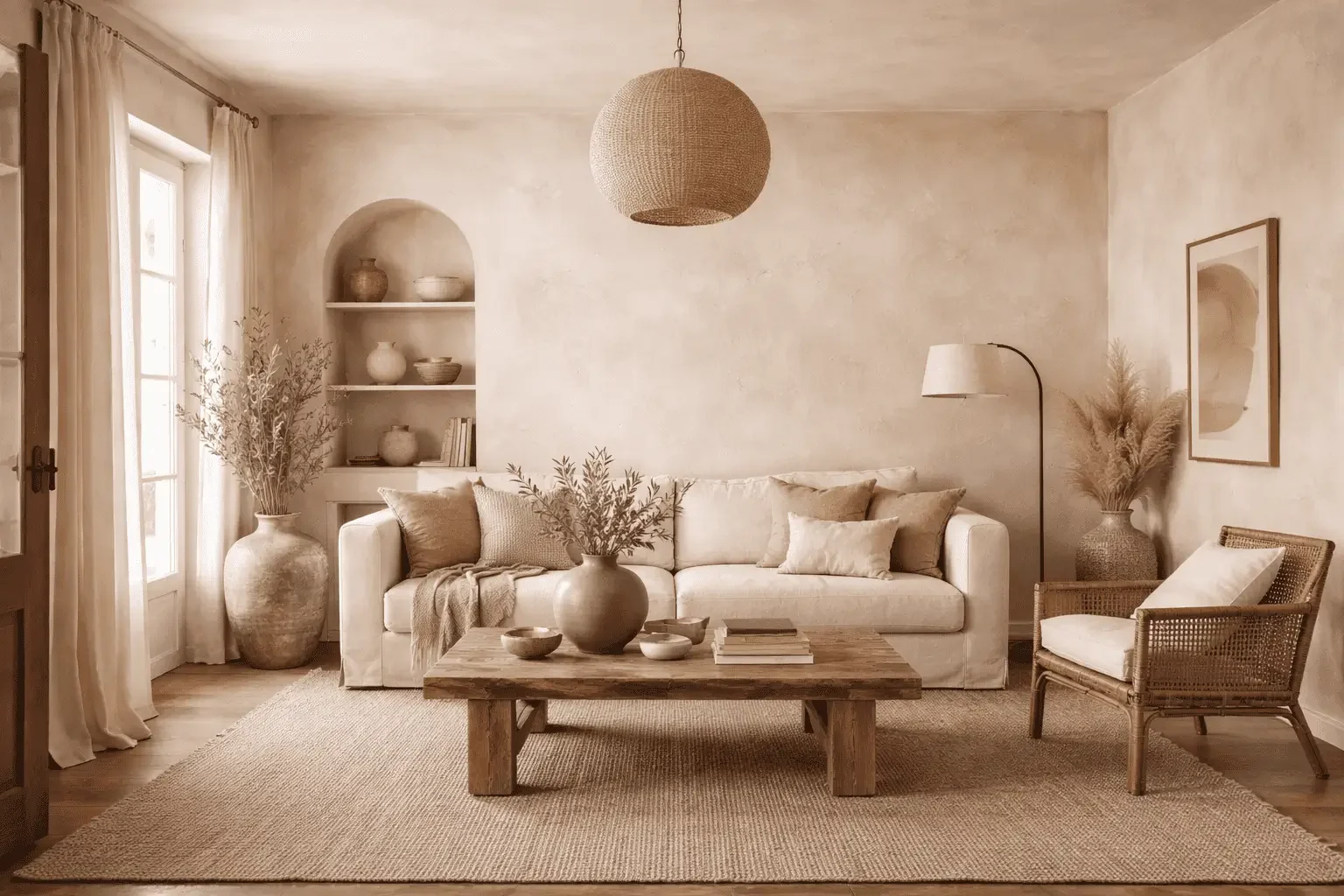
What makes limewash stand out visually is its movement. It doesn’t dry into a flat, uniform color. Instead, you get soft variations and gentle shading. The finish looks calm, lived-in, and full of character.
When I apply limewash, no two walls ever look exactly the same. And that’s the beauty of it.
How Limewash Paint Is Different From Standard Paint
Most people are used to walls that look smooth and consistent. You roll on paint, and you get even coverage from corner to corner.
Limewash paint works differently.
Standard paint:
Sits on top of the wall
Seals the surface
Creates solid, uniform color
Limewash:
Soaks into porous material
Allows the wall to breathe
Creates depth and tonal variation
Because it’s mineral-based, limewash reacts with the surface. It lightens as it dries and continues to cure over time. The finish ends up matte and chalky, never shiny.
If you want crisp, flawless walls, limewash may not be your style. But if you love softness and natural texture, it can be a perfect fit.
Why I Recommend Limewash for Certain Homes
I don’t suggest limewash for every project. But in the right space, it looks incredible.
I often recommend it for:
Living rooms with lots of natural light
Bedrooms where you want a calm atmosphere
Dining rooms with wood or stone features
Accent walls that need depth without heavy texture
Limewash pairs beautifully with natural materials. If your home has wood beams, brick fireplaces, stone details, or plaster walls, limewash blends right in.
It also works well in older homes. The finish doesn’t feel overly modern or glossy. It feels like it belongs there.
How to Limewash Walls Properly
Now let’s talk about the process. When clients ask about how to limewash walls, I explain that it’s not as simple as opening a can and rolling it on.
The application makes all the difference.
Step 1: Evaluate the Surface
Limewash works best on porous materials like:
Raw plaster
Brick
Stone
Masonry
If your wall is already painted with latex paint, we need to address that first. Limewash won’t absorb properly into sealed surfaces. In many cases, I apply a mineral-based primer that allows the limewash to bond correctly.
Skipping this step can lead to uneven results or poor adhesion.
Step 2: Prepare the Wall
The wall needs to be clean and free of dust, grease, or loose material. I also protect floors, trim, and nearby surfaces carefully. Limewash can splatter more than regular paint because of the brushing technique.
Step 3: Mix the Limewash Paint
Most limewash paint comes concentrated and must be diluted with water. The ratio affects the final look. Thinner mixes create softer layers. Slightly thicker mixes provide more coverage.
I always test a small area first. Limewash dries lighter than it appears when wet, so patience is important.
Step 4: Dampen the Surface
Before applying, I lightly mist the wall with water. This helps the limewash absorb evenly and prevents harsh lines.
Step 5: Apply With a Brush
This is where technique matters.
Limewash is applied with large, natural-bristle brushes in crisscross or “X” patterns. The strokes overlap, creating movement and variation. After the first coat dries, a second coat adds depth and balance.
The final look depends on pressure, brush angle, and dilution. Experience makes a big difference here.
What to Expect During the Drying Process
One thing I always tell homeowners is not to judge limewash while it’s drying.
It goes on darker and patchy. That’s normal.
As it cures, the color softens and evens out. The cloudy movement becomes more subtle and natural. This can take a few days to fully develop.
I’ve had clients call me a few hours after the application, worried about the appearance. Then they see it the next day and fall in love with it.
Trusting the process is part of the experience.
Where Limewash Works Best And Where It Doesn’t
Limewash performs best in low- to moderate-traffic areas. Bedrooms, sitting rooms, and dining areas are ideal.
In high-traffic spaces, you need to consider durability. Limewash has a matte, breathable finish. It doesn’t clean as easily as standard paint. If you have young kids who love to touch every wall, we’ll talk through whether it’s the right choice.
For kitchens and bathrooms, placement matters. Accent walls away from water exposure work well. Areas exposed to heavy splashing may need a different solution.
My job is to help you choose what fits your lifestyle, not just what looks good in photos.
How Long Does Limewash Lasts
One reason I respect limewash so much is its longevity. On proper surfaces, it can last for many years.
Because it absorbs into the wall instead of sitting on top, it doesn’t peel the same way standard paint can. Over time, it may soften slightly, which often adds to its charm.
If you ever want to refresh it, applying another coat is usually straightforward. You don’t have to strip everything down.
That durability, combined with its natural look, makes it a strong option for homeowners who want something timeless.
Is Limewash Right for You?
I always ask a few simple questions during consultations:
Do you like subtle movement in color?
Are you comfortable with a handcrafted look?
Are you okay with a finish that isn’t perfectly uniform?
If the answer is yes, limewash can be a beautiful addition to your home.
If you prefer smooth, even, and highly washable walls, traditional paint might be better.
Every project is personal. I never push limewash just because it’s popular. It has to make sense for your space and your goals.
Let’s Talk About Your Walls
If you’re considering limewash and want it done correctly, I’d be happy to help. At Stephen Radl Painting, I take the time to prepare surfaces properly, test finishes, and apply limewash with the care it requires.
This finish is all about technique. The brushwork, dilution, and surface prep matter just as much as the product itself.
Reach out through Stephen Radl Painting to schedule a consultation. Let’s look at your space together and decide if limewash paint is the right choice for your home.
FAQs
How do you lime wash a wall?
Limewashing a wall starts with making sure the surface is porous and clean. The limewash paint is diluted according to the manufacturer’s directions. The wall is lightly dampened to help with absorption. Using a large natural-bristle brush, the limewash is applied in overlapping crisscross strokes. Typically, two coats are applied, allowing proper drying time between them. The finish lightens as it cures.
What is the disadvantage of lime wash?
Limewash has a soft, matte finish that is not as washable as standard latex paint. It also requires the right surface conditions to bond properly. The color variation is intentional, which may not suit homeowners who prefer uniform walls.
What kind of paint do you use for limewash?
True limewash uses mineral-based limewash paint made from limestone and water. It is different from traditional latex or oil-based paint and creates a breathable finish that absorbs into porous surfaces.
How long does limewash last?
When applied to proper surfaces like plaster or masonry, limewash can last many years. It ages naturally and can be refreshed with additional coats if needed.
Can you apply limewash over existing paint?
Yes, but preparation is required. Since limewash needs a porous surface, a mineral-based primer is often applied first to help it bond correctly over existing painted walls.